Automatic translation is not available for this article yet — showing the original text.
Review: JCALLY AP6 – Power and Simplicity in a Compact Dongle
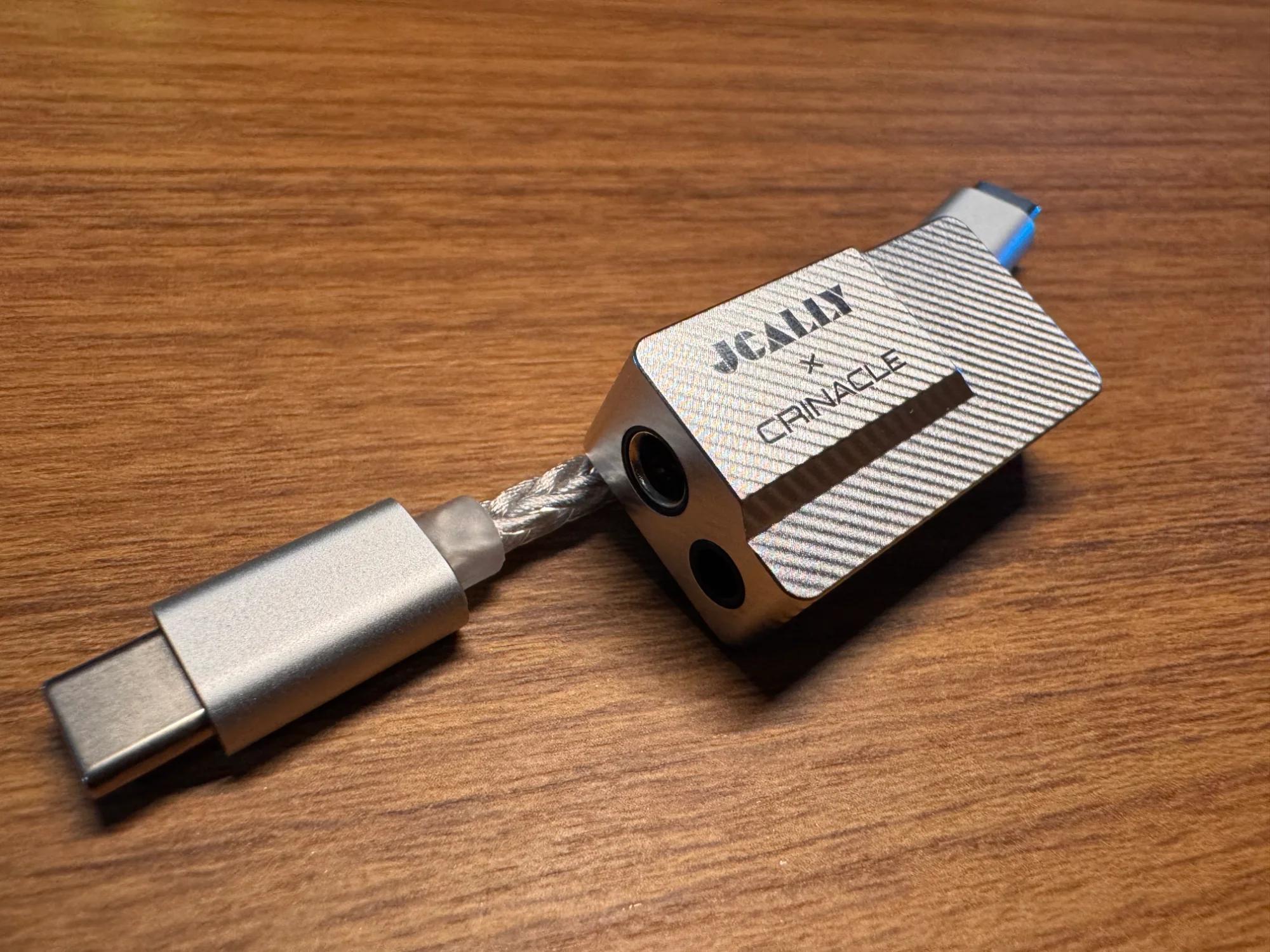
Hello, Avaliasom friends. I am Marcelo Dosec, and today I am bringing you the JCALLY AP6, a DAC/AMP dongle developed in partnership between JCALLY and Crinacle, which I bought following a suggestion from my follower XandHunter. Thanks for the suggestion, my friend!
Right now, its price is around 53 USD, and it is available in only a few stores on AliExpress. Some listings offer it for lower prices, but the lack of buyers and reviews in those stores calls for some caution before purchasing.
**Note:** Before moving forward, I want to be clear that my source reviews are strictly informative and subjective. Here, I test gear like an everyday user. For more technical content with objective measurements, I recommend specialized sites such as *Audio Science Reviews*, for example.
---
Unboxing, Features, and Dimensions
The AP6 comes in a very simple box, with no luxury extras, containing only:
* The JCALLY AP6 dongle;
* A short USB-C to USB-C cable;
* A USB-C to USB-A adapter.
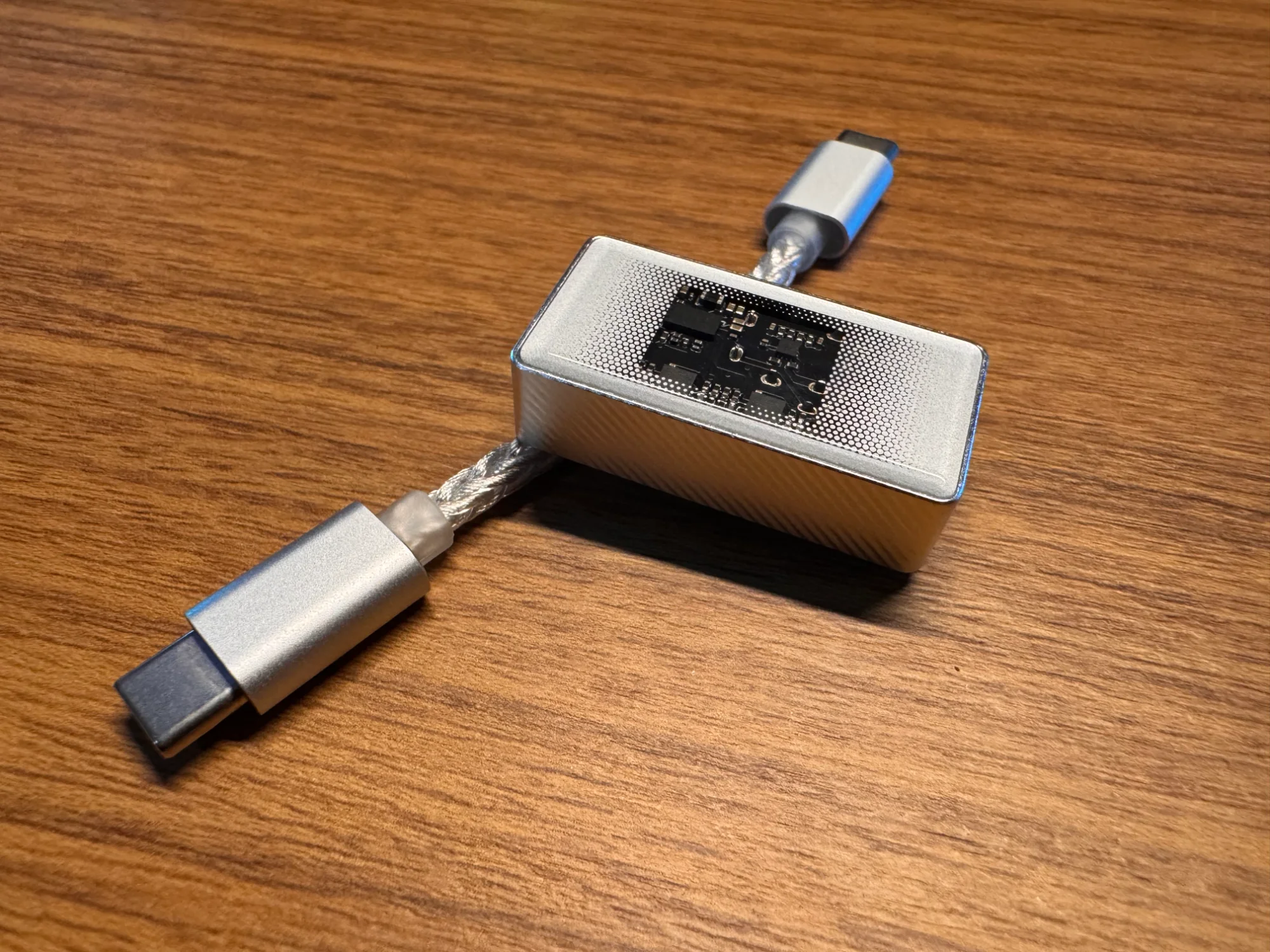
Its body is sturdy and well built, featuring a metal chassis and a tempered glass faceplate with a transparent window that lets you see the PCB along with the DAC and amplifier chips inside.
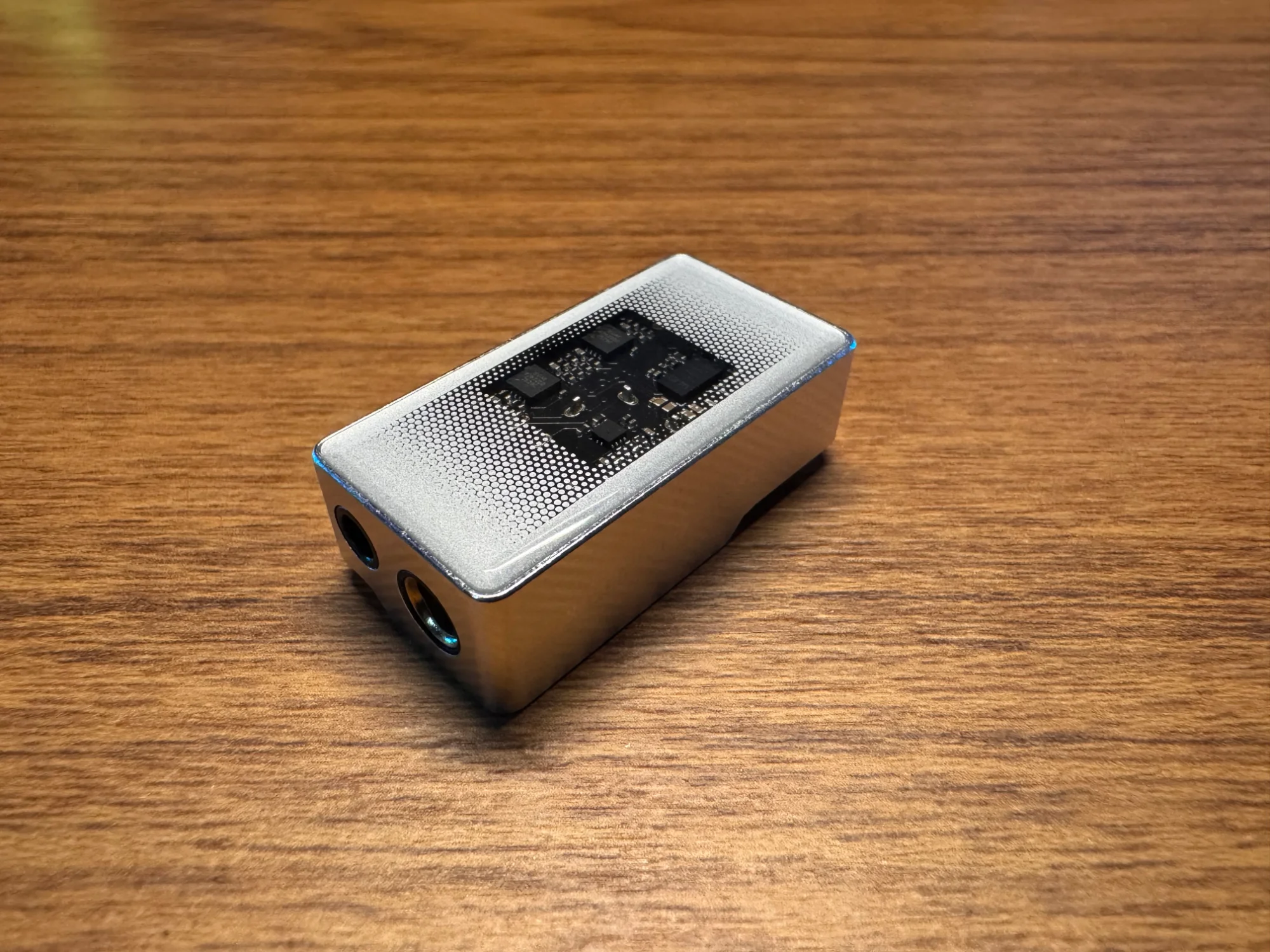
It offers 3.5 mm (Single-Ended) and 4.4 mm (Balanced) outputs, plus a USB-C port to connect to your audio source. However, one thing that bothers me is the lack of physical volume buttons on the unit, so I always recommend checking your phone or computer volume before hitting play.
Compact and well suited for EDC (Everyday Carry), the device has the following dimensions:
* Dongle: 38.7 mm (length) x 19.9 mm (width) x 12.8 mm (height) | Weight: 13.1 g
* Included cable: 10.7 cm (length) | Weight: 5.2 g
---
Specifications
The JCALLY AP6 uses a dual-output Conexant CX31993 DAC chip — a fairly basic DAC, paired with a pair of SG Micro SGM8262 operational amplifiers (op-amps), the same ones found in the Tanchjim Space Pro, for example.
Its advertised power output is its biggest selling point, rated at 540 mW. However, there is a marketing catch behind that number: that maximum rating is reached at 16 ohms. At 32 ohms, the manufacturer states it delivers 440 mW from the balanced output (4.4 mm) and 115 mW from the single-ended output (3.5 mm). Just for comparison, my iFi Hip Dac 3 delivers 400 mW on its balanced output. So despite its small footprint, the AP6 packs plenty of muscle.
Specs summary:
* DAC Chip: Conexant CX31993 (Dual)
* Op-Amps: Dual SG Micro SGM8262
* Supported Resolution: PCM up to 32-bit / 384 kHz (and single-channel ADC up to 24-bit / 96 kHz)
* Output Power (32 ohms): 440 mW (4.4 mm BAL) / 115 mW (3.5 mm SE)
* Peak Power (16 ohms): 540 mW
* SNR (Signal-to-Noise Ratio): 116 dB
* DNR (Dynamic Range): 96 dB
* THD+N (Total Harmonic Distortion + Noise): 0.003%
* Output Impedance: Less than 1 ohm (balanced output)
JCALLY does not publish official power consumption numbers, but in my testing I noticed that after roughly one hour of continuous playback on my iPhone (in airplane mode with only Qobuz running), battery level dropped by about 4%.
---
Features and Daily Use
It is a straightforward dongle with no Bluetooth, no built-in battery, no gain switch, no status LED, and no companion app.
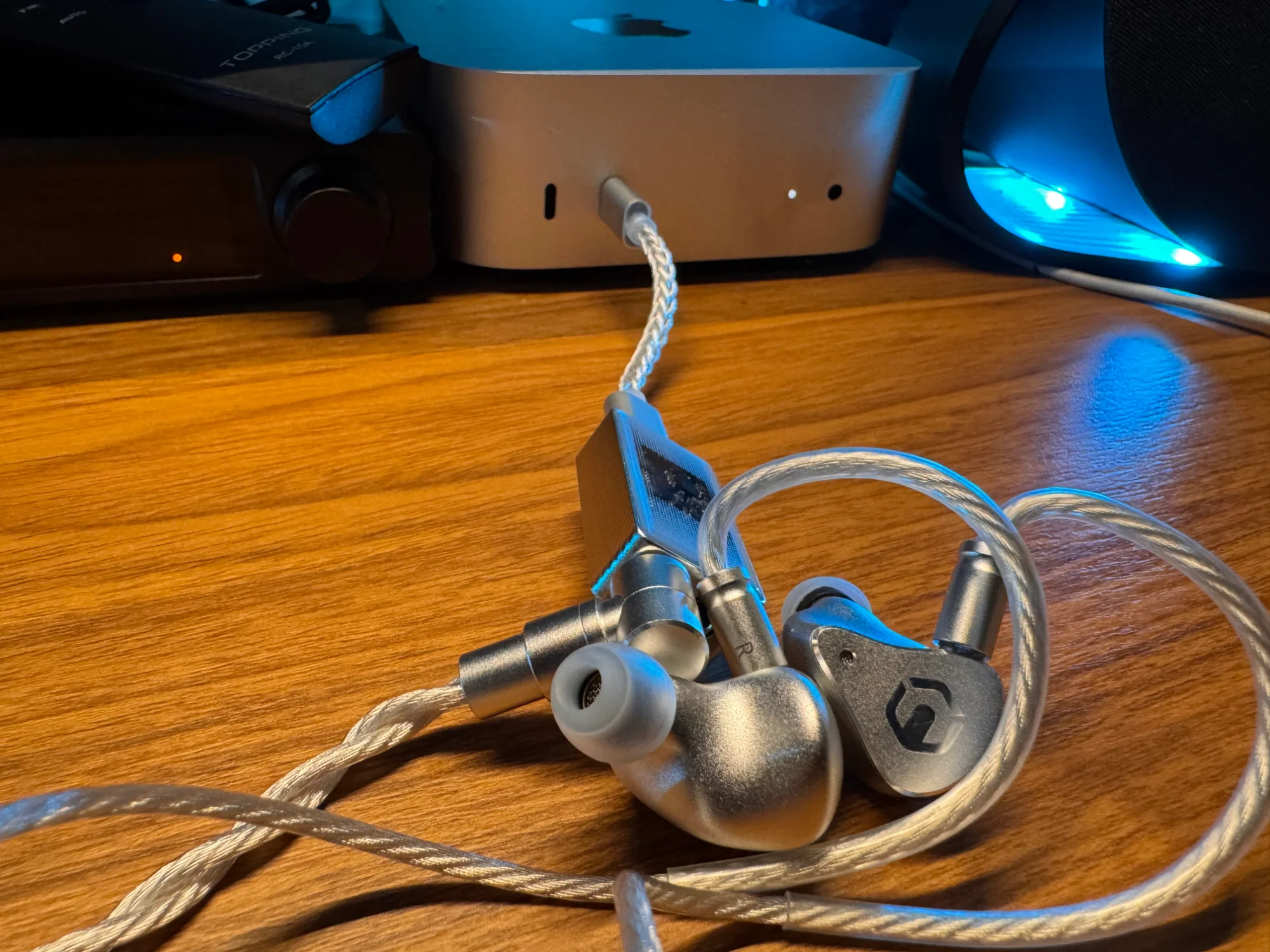
Connecting it to an iPhone, Mac, or Windows PC is completely plug and play, with no extra steps like manual driver downloads. If you use an IEM or headphone with an inline cable microphone, the mic works as expected on both mobile and desktop.
One practical detail to watch out for is how volume scales across operating systems:
* On iPhone: The system caps output quite a bit and allows finer volume adjustment (I used around 30% volume).
* On Mac: I used roughly 20% volume.
* On Windows PC: At just 5 volume steps it already gets too loud for my taste. My tip is to turn Windows volume all the way down before plugging in the AP6 and raise it gradually.
---
Sound
To test the AP6's sound, I used three headphones with very different profiles:
* Hidizs MS5: To test behavior with ultra-low impedance;
* Hifiman HE400se: To test amplification drive on a demanding planar magnetic headphone;
* Crinear Reference: As my baseline reference for neutrality and the sound signature I am used to hearing.
To my ears, the AP6 delivers a neutral sound, leaning slightly toward an analytical presentation, similar in spirit to the Topping DX3 Pro+, for example. There is no obvious coloration in any part of the frequency range, and with standard IEMs I did not hear any noise floor.
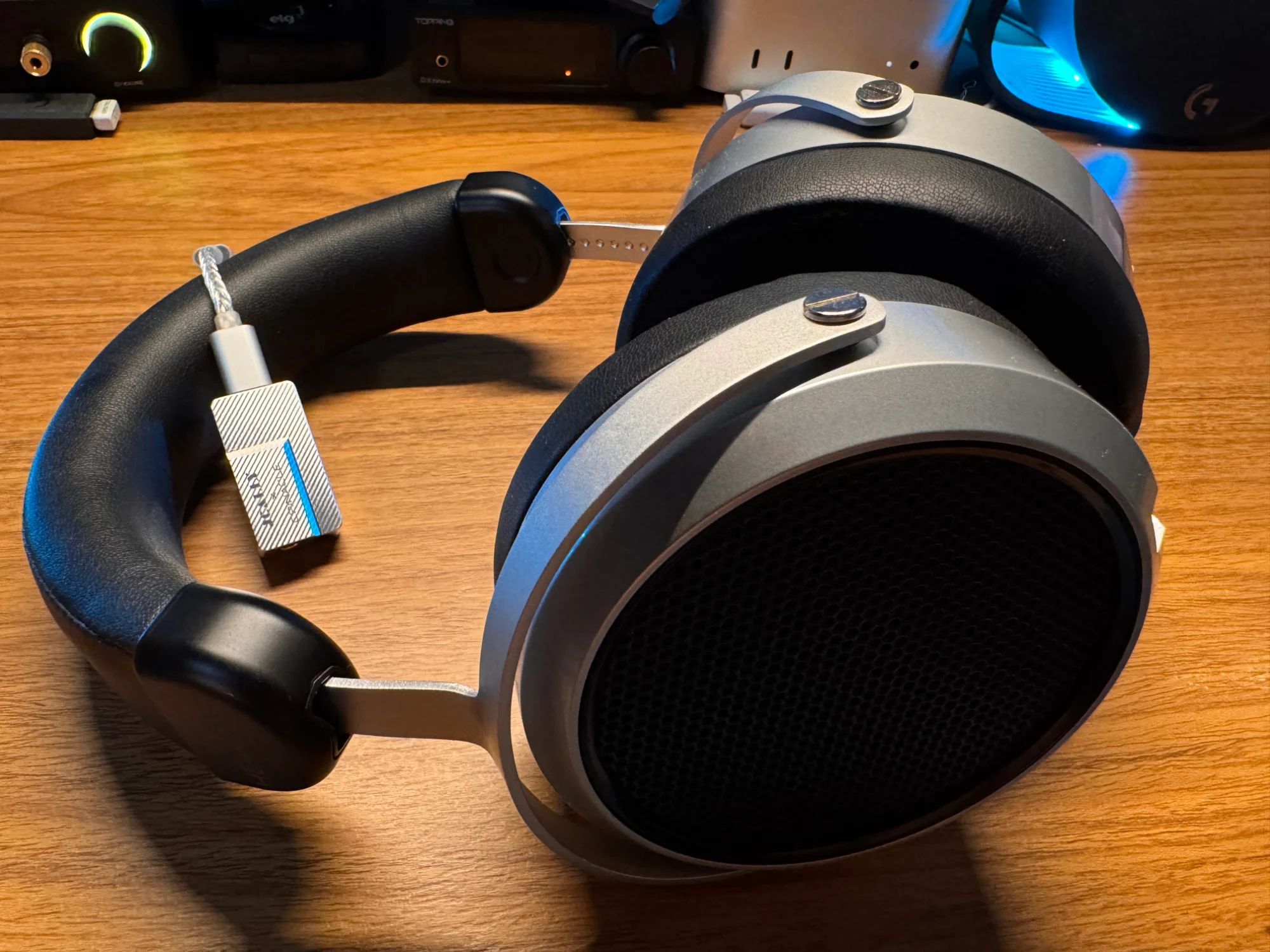
Regarding amplification, on the 3.5 mm output the Hifiman HE400se sounds a bit leaner than ideal even when turning up the volume — it lacked bass body and texture, especially compared side-by-side against a desktop source. Only on the 4.4 mm output can the AP6 drive the HE400se to my satisfaction.
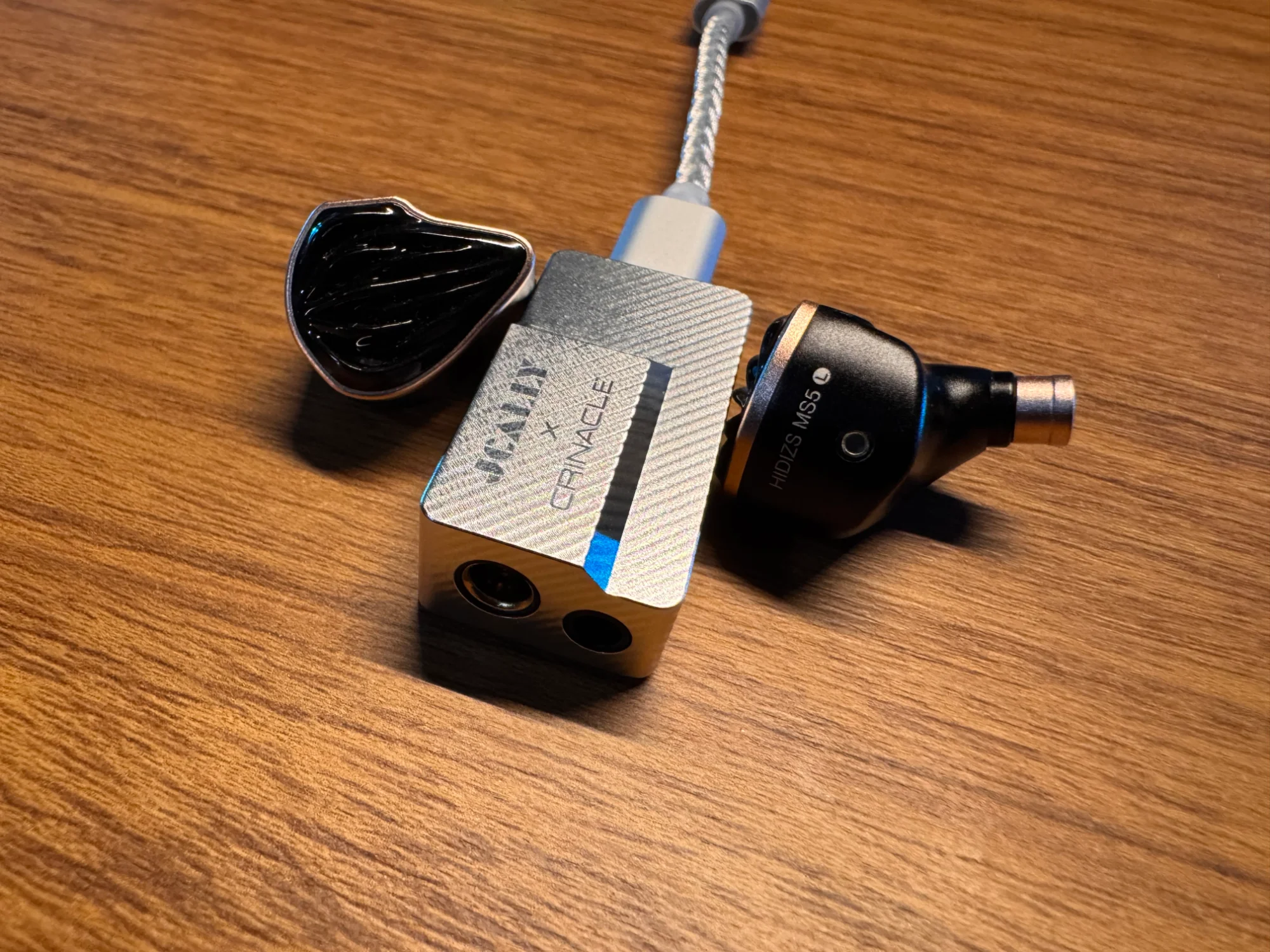
With the Hidizs MS5 and its very low 5.3-ohm impedance, I heard a very subtle noise floor, and volume control became trickier: on Windows PC, even the lowest volume setting felt too loud for comfortable listening.
In terms of technicalities, the AP6 is quite honest, giving you what the transducer naturally brings to the table, though with noticeably less refinement than my newly arrived Tanchjim Space Pro.
---
Conclusion
All things considered, the JCALLY AP6 is a very spartan source that wins you over by being simple to use and neutral in sound. It is a practical dongle and a solid everyday companion. Living up to its main marketing hook, it can drive even demanding planar headphones respectfully, provided you use the 4.4 mm balanced output. Among IEMs, it should handle the vast majority of models well, aside from ultra-low impedance outliers (which are rare).
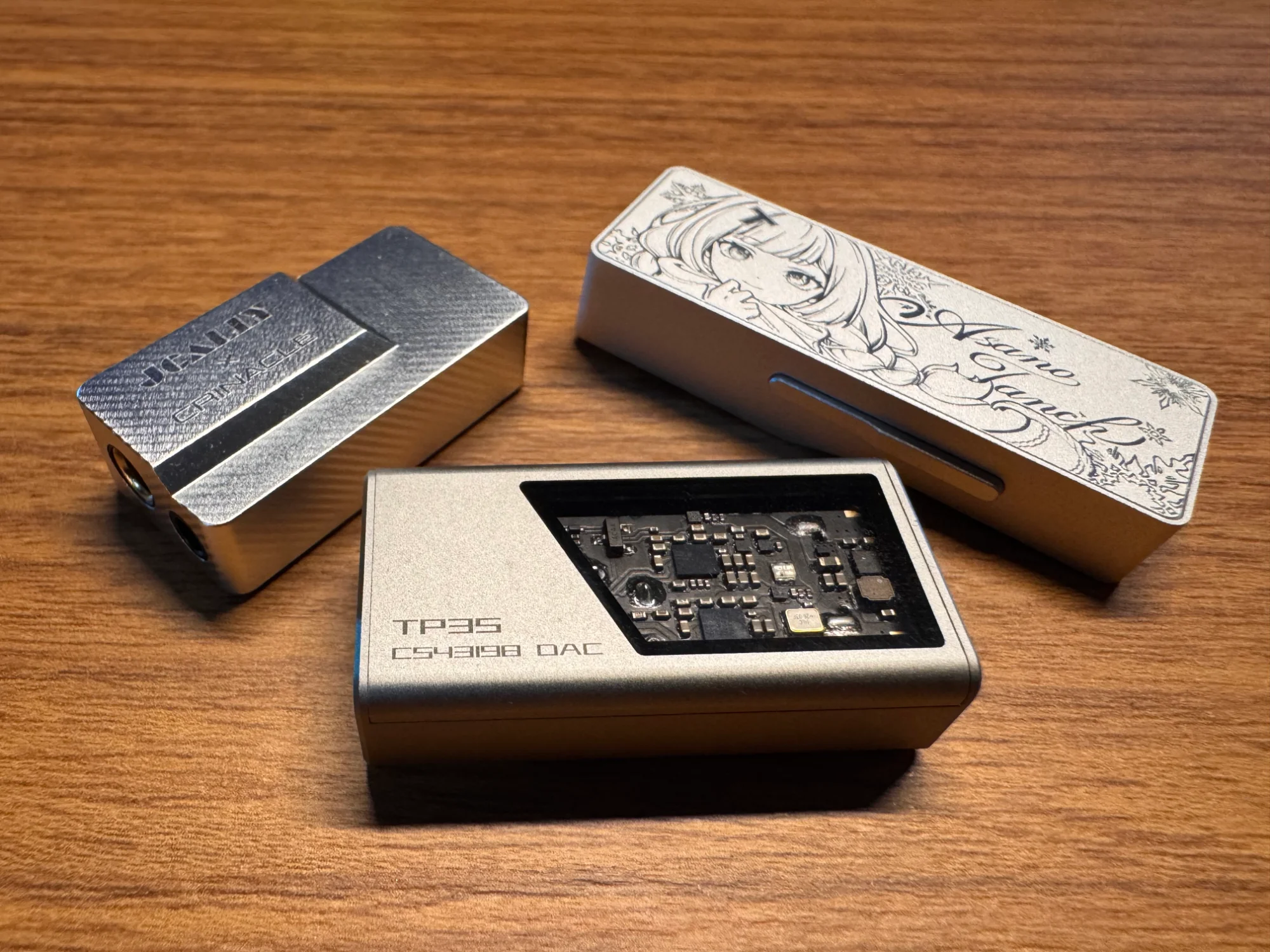
It was a unit I enjoyed using during the stretch between losing my EPZ TP35 and receiving the Tanchjim Space Pro. Now that the Space Pro has taken over main duties, it is time to put the AP6 back in the cabinet alongside its silica gel packets.
Sound good? If you enjoyed the review, leave a comment below sharing your experience or questions. Big hug, thanks for your time, and see you next time!
About the author

AvaliaSom
Avaliações com nota por critério: graves, médios e agudos (tonalidade) e palco, imaging, detalhes e separação (tecnicalidades), além de construção, testes de volume, jogos e filmes. Planilha atualizada desde 2022.